
Signs of a Collapsed Drain: How to Identify the Problem and What to Do Next
Uploaded on November 29, 2026
Created by 1st Response Drainage
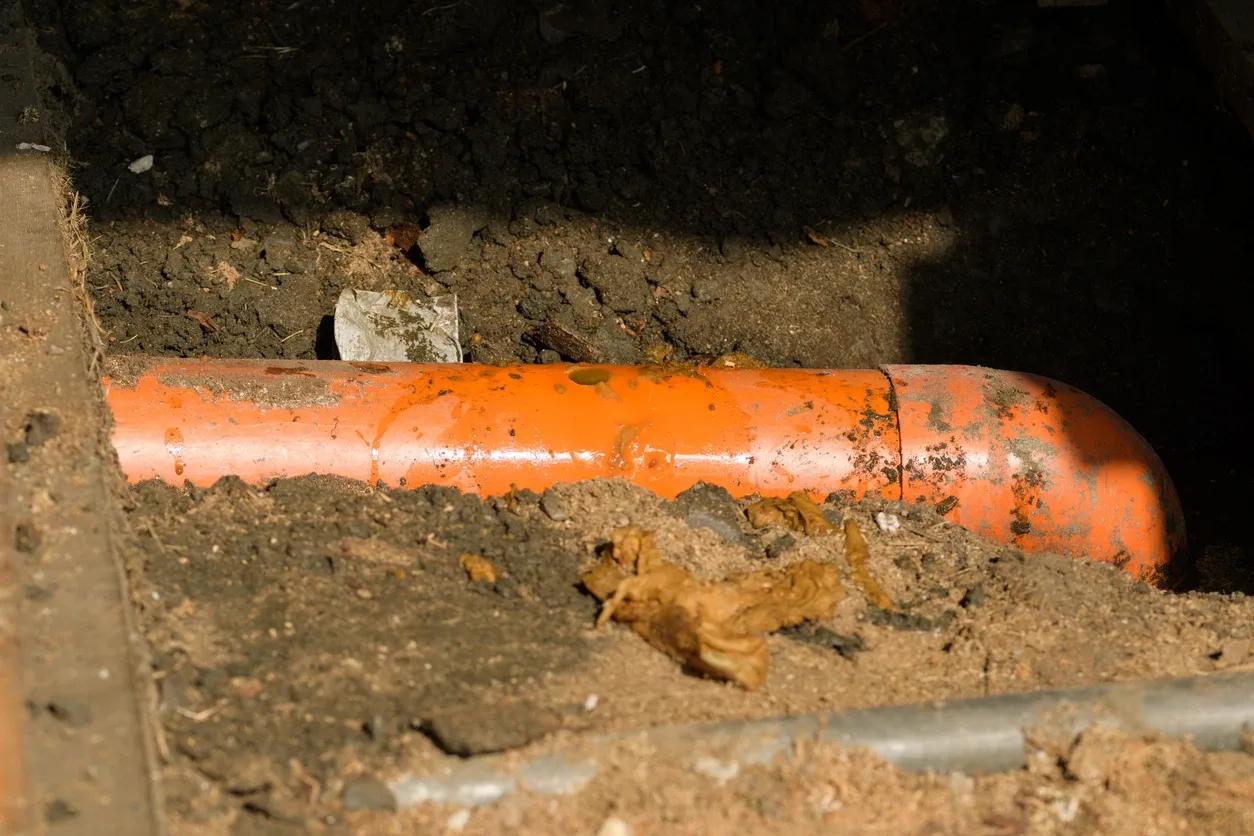
A collapsed drain is one of the more serious problems that can affect an underground drainage system. Unlike a straightforward blockage, where something is preventing water from flowing through the pipe, a collapsed drain involves a structural failure of the pipe itself.
Because most drainage pipes are buried underground, the damage can develop without being immediately visible. In many cases, the first indication of a problem is a change in how the drainage system performs.
Recurring blockages, unexplained damp patches and changes to the ground around a property can all indicate that something more serious is happening beneath the surface.
However, these symptoms don't necessarily mean a drain has collapsed.
In this guide, we'll explain what causes drains to collapse, how to recognise the warning signs, how drainage engineers identify structural damage and what repair options may be available.
What Is a Collapsed Drain?
A collapsed drain occurs when a section of underground drainage pipe loses its structural integrity, causing it to partially or completely fail.
Depending on the extent of the damage, sections of the pipe may break away, move out of position or collapse inwards, restricting or preventing the flow of wastewater.
A partial collapse may still allow some water to pass through the pipe, which means the drainage system can continue functioning for a period of time despite the damage.
A complete collapse, however, can prevent wastewater from flowing through the affected section altogether.
It's important to understand that not every damaged drain has collapsed. Cracks, fractures and displaced joints are all forms of structural damage, but they don't necessarily mean the pipe has failed completely.
Identifying the extent of the damage is an important part of determining the most appropriate repair.
What Causes Underground Drains to Collapse?
Underground drainage pipes are designed to withstand considerable pressure and provide many years of service.
However, several factors can affect their structural condition over time.
Ageing Drainage Pipes
Many older properties still rely on drainage systems constructed using clay or other traditional pipe materials.
Although these materials can remain functional for decades, individual sections may become damaged through deterioration, ground movement or changes in the surrounding environment.
Small defects can gradually develop into more significant structural problems if left unresolved.
Ground Movement
The ground surrounding underground drainage pipes is not always completely stable.
Changes in soil moisture, settlement and movement within the surrounding ground can place additional stress on drainage pipes.
In areas with shrinkable clay soils, prolonged dry weather followed by wetter conditions can contribute to changes in ground movement.
Our guide to how hot weather can affect older drainage systems explains how these changing conditions can affect underground pipework.
Tree Root Intrusion
Tree roots can enter drainage systems through existing cracks, defective joints and other small openings.
As the roots continue growing, they can restrict water flow, displace joints and potentially worsen existing structural damage.
In more severe cases, root intrusion can contribute to the failure of an already weakened section of pipe.
We've explored this in more detail in our guide to tree roots in drains, including how roots are identified, removed and prevented from returning.
Excessive External Pressure
Underground drainage pipes can also be affected by pressure from above.
Construction work, heavy vehicles, changes to ground levels or poorly supported pipework can place additional loads on a drainage system.
Where a pipe is already weakened, inadequately supported or unsuitable for the load being applied, this additional pressure may contribute to structural failure.
Poor Installation or Previous Repairs
Drainage pipes that haven't been installed with suitable bedding, support or alignment may be more vulnerable to movement over time.
Similarly, previous repairs that haven't adequately addressed the underlying problem can leave sections of the drainage system susceptible to further damage.
Signs You May Have a Collapsed Drain
Because underground drainage pipes are hidden from view, identifying a collapsed drain usually begins with recognising changes above ground.
The following warning signs may indicate structural damage within a drainage system, although further investigation is needed to establish the exact cause.
Recurring Blocked Drains
A drain that repeatedly becomes blocked despite being professionally cleared may have an underlying structural problem.
A damaged or partially collapsed section of pipe can create an obstruction that repeatedly catches waste and debris as it passes through the drainage system.
Clearing the accumulated material may temporarily restore the flow, but the damaged section remains.
If the same drain continues to block, investigating the condition of the pipe may be more beneficial than repeatedly arranging drain clearance.
Persistent Slow Drainage
A partially collapsed drain can restrict the amount of wastewater able to pass through the pipe.
This may result in sinks, toilets, showers or other fixtures draining more slowly than usual.
Where several fixtures are affected at the same time, the problem may be located further along the drainage system rather than within an individual waste pipe.
Unexplained Damp or Waterlogged Areas
If an underground drainage pipe becomes damaged, wastewater may escape into the surrounding ground.
Depending on the location and extent of the damage, this can result in areas of persistent dampness or unusually waterlogged ground.
Damp patches that remain during periods of dry weather may be particularly worth investigating.
However, other issues, including leaking water supply pipes and poor surface water drainage, can produce similar symptoms.
Sunken or Uneven Ground
In some circumstances, water escaping from damaged underground pipework can gradually disturb or wash away the surrounding soil.
Over time, this may contribute to localised ground settlement.
You might notice:
- Depressions appearing in lawns
- Uneven paving slabs
- Areas of sinking driveway
- Changes in ground levels around drainage runs
- Unexpected movement around inspection chambers
These symptoms should not be ignored, particularly if the ground appears unstable or the affected area is increasing in size.
Persistent Drainage Smells
Unpleasant smells around a property can have several causes, but damaged drainage pipes may allow wastewater or drainage gases to escape from the system.
Persistent odours that cannot be explained by a straightforward blockage or another common drainage issue may warrant further investigation.
Wastewater Backing Up
Where a section of drainage pipe has partially or completely collapsed, wastewater may struggle to flow away from the property.
This can cause water to back up through inspection chambers, outside gullies or internal drainage fixtures.
If wastewater begins backing up into your property, stop using the affected drainage fixtures where possible, avoid contact with contaminated water and arrange professional assistance promptly.
Is Your Drain Blocked or Collapsed?
One of the challenges when investigating drainage problems is that a blocked drain and a collapsed drain can produce very similar symptoms.
Both can restrict water flow, cause overflowing drains and result in wastewater backing up.
The difference lies in what is preventing the water from passing through the pipe.
A blocked drain is generally caused by material accumulating within the drainage system, such as grease, wipes, debris or tree roots.
A collapsed drain involves structural failure of the pipe itself.
In some cases, both problems can exist at the same time. A partially collapsed pipe may repeatedly collect debris, creating a blockage on top of the existing structural damage.
This is why successfully clearing a blockage doesn't always mean the underlying drainage problem has been resolved.
Our blocked drain clearance service can help restore the flow where an obstruction is present. Where structural damage is suspected, further investigation may be required.
How Is a Collapsed Drain Diagnosed?
Identifying a collapsed drain accurately is important before deciding how it should be repaired.
Rather than excavating an area based solely on the symptoms above ground, drainage engineers can use specialist equipment to investigate the condition and location of underground pipework.
CCTV Drainage Surveys
A CCTV drainage survey allows engineers to inspect the inside of underground drainage pipes using specialist camera equipment.
The camera is introduced through a suitable access point and guided through the drainage system while the engineer monitors the footage.
This can help identify:
- Cracked and fractured pipes
- Displaced or separated joints
- Missing sections of pipe
- Root intrusion
- Deformation of the pipe
- Partial or complete collapses
If the camera cannot travel beyond a particular point, further investigation may be necessary to determine the nature and extent of the obstruction.
Our guide to what a CCTV drain survey is and when you need one explains the inspection process in more detail.
Sonde and Drain Tracing
Identifying damage inside a pipe is only part of the investigation.
It's also important to establish where the affected section is located beneath the ground.
Sonde and tracing equipment can help drainage engineers locate underground pipework and pinpoint the approximate position and depth of a defect.
This is particularly useful when drainage routes are unknown or when a damaged section runs beneath a garden, driveway or other hard surface.
Accurately locating the problem helps engineers plan repairs and can reduce unnecessary excavation and disruption.
Can a Collapsed Drain Be Repaired Without Digging?
Not all structural drainage problems require excavation.
Advances in drainage repair techniques mean that many damaged pipes can be repaired internally using specialist no-dig solutions.
However, whether a collapsed drain can be repaired without digging depends on the condition of the pipe and the extent of the structural failure.
Patch Lining and No-Dig Repairs
Where a pipe remains sufficiently intact, localised structural defects may be suitable for repair using a patch liner.
A patch liner is positioned inside the affected section of pipe and cured in place, creating a new internal repair that reinforces the damaged area.
This technique can be suitable for certain defects, including:
- Localised cracks
- Fractured pipe sections
- Defective joints
- Small areas of structural damage
- Suitable root entry points following root removal
Our patch liners and no-dig repairs service provides a way of repairing suitable drainage defects without the disruption associated with traditional excavation.
When Excavation May Be Necessary
If a section of pipe has completely collapsed, become severely displaced or lost its structural shape, an internal repair may not be possible.
In these circumstances, excavation may be necessary to access and replace the affected section of pipe.
The important thing is to establish the condition of the drainage system before recommending a repair.
A CCTV inspection, combined with drain tracing where appropriate, can help determine whether a no-dig solution is suitable or whether more extensive work is required.
What Happens If a Collapsed Drain Is Left Unrepaired?
Structural drainage problems are unlikely to resolve themselves.
Although a partially collapsed pipe may continue functioning for some time, the damaged section can remain vulnerable to further deterioration.
Depending on the nature and location of the damage, leaving the problem unresolved may result in:
- Increasingly frequent blockages
- Further deterioration of the pipe
- Wastewater escaping into the surrounding ground
- Localised ground settlement
- Increased root intrusion
- Complete loss of drainage flow
- More extensive repairs becoming necessary
Investigating a suspected structural defect early can help establish whether a relatively localised repair is possible before the problem develops further.
Collapsed Drain Investigations Across Norfolk, Suffolk & Cambridgeshire
Underground drainage problems can affect properties of any age, from older homes with original clay drainage systems to modern developments where pipework has become damaged or displaced.
At 1st Response Drainage, we provide professional drainage investigations, CCTV inspections and specialist drainage repairs throughout Norfolk, Suffolk and Cambridgeshire.
We help homeowners and businesses identify and resolve drainage problems across the region, including:
Whether you're experiencing recurring blockages, unexplained drainage problems or suspect that an underground pipe has become damaged, establishing the cause is the first step towards finding the right solution.
You can explore all of the towns and areas we cover on our locations page.
Our Expert Advice
One of the most important things to understand about structural drainage problems is that restoring the flow doesn't necessarily mean the drain is in good condition.
A damaged pipe can continue functioning between blockages, making it easy to assume that the problem has been resolved once wastewater starts flowing normally again.
However, if the same symptoms keep returning, it's worth investigating the condition of the pipe itself.
Equally, a recurring blockage doesn't automatically mean your drain has collapsed. There may be a much simpler explanation.
The aim of a professional drainage investigation is to remove that uncertainty.
By establishing the nature, location and extent of any damage, we can determine whether the drain simply needs cleaning, whether a localised repair is suitable or whether more extensive work is necessary.
Identifying the problem before recommending the solution helps avoid unnecessary work, expense and disruption.
Related Guides
If you're experiencing recurring drainage problems or suspect damage to your underground pipework, you may also find these articles useful:
- What Is a CCTV Drain Survey and When Do You Need One?
- Tree Roots in Drains: Signs, Causes and How They're Removed
- How Hot Weather Can Affect Older Drainage Systems
- How Heavy Rain Can Affect Your Drains
- Who Is Responsible for Blocked Drains?
FAQs
How do I know if my drain has collapsed?
Recurring blockages, persistent slow drainage, unexplained damp patches and localised ground settlement can all indicate structural drainage problems. However, these symptoms alone cannot confirm that a drain has collapsed. A CCTV drainage survey can help establish the condition of the underground pipework.
Can a partially collapsed drain still work?
Yes. A partially collapsed drain may still allow some wastewater to pass through the pipe. However, the damaged section can restrict flow and repeatedly collect debris, potentially leading to further blockages.
Can a collapsed drain be unblocked?
It may be possible to temporarily restore some drainage flow if debris has accumulated around a partially collapsed section of pipe. However, clearing the obstruction will not repair the structural damage.
Can a collapsed drain be repaired without excavation?
Some structural drainage defects can be repaired using no-dig techniques such as patch lining. However, a completely collapsed or severely displaced pipe will generally require excavation and replacement of the affected section.
A professional inspection can help determine the most suitable repair method.
Can a collapsed drain cause subsidence?
In some circumstances, water escaping from damaged drainage pipes can disturb or wash away surrounding soil, potentially contributing to localised ground settlement.
However, subsidence can have several causes and should not automatically be attributed to a damaged drain. Significant ground movement or suspected structural damage to a building should also be assessed by an appropriately qualified professional.
How much does it cost to repair a collapsed drain?
The cost depends on several factors, including the location and depth of the damaged pipe, the extent of the collapse, accessibility and the repair method required.
A drainage investigation can help establish the scope of the work before an appropriate repair can be recommended.
Does home insurance cover collapsed drains?
Some buildings insurance policies provide cover for certain types of accidental damage to underground drainage pipes.
However, cover varies between insurers and policies, and deterioration, wear and tear or other causes may be excluded.
It's worth checking your policy and contacting your insurer before arranging non-emergency repairs.
Who is responsible for repairing a collapsed drain?
Responsibility depends on the location of the damaged pipe, the properties it serves and whether it forms part of the public sewer network.
Homeowners are generally responsible for private drains serving their property within their property boundary, while public sewers and many lateral drains are the responsibility of the local sewerage company.
Our guide to who is responsible for blocked drains explains drainage responsibility in more detail.
Concerned Your Drain May Have Collapsed?
If you're experiencing recurring blockages, persistent drainage problems or suspect that an underground pipe has become damaged, a professional drainage investigation can help establish exactly what's happening beneath the surface.
At 1st Response Drainage, we provide specialist CCTV drainage surveys, underground drain tracing and no-dig drainage repairs throughout Norfolk, Suffolk and Cambridgeshire.
We'll investigate the problem, explain our findings and recommend the most appropriate next steps based on the condition of your drainage system.
Explore our CCTV drainage surveys and patch liners and no-dig repairs, or contact us to discuss your drainage problem.
Need Drainage Help Today? We're Ready To Respond!
Whether it's a blocked drain, CCTV survey or urgent repair, our local engineers are on standby to help across East Anglia. Fast, reliable service, whenever you need it.
Request a CalloutCall today on 07537149523